

Introduction
For many startups and small businesses, the decision between hiring an intern or bringing on a part-time employee can feel confusing. The terms are often used interchangeably, especially in early-stage companies where founders are trying to fill multiple roles quickly and affordably. However, internships and part-time jobs are fundamentally different arrangements, both in purpose and in legal structure.
Misunderstanding the distinction can create problems for employers. Some companies label workers as interns when they are actually performing the duties of regular employees. Others hire part-time workers when what they truly need is a short-term, educational role focused on mentorship and learning. In both cases, the mismatch can lead to inefficiencies, poor hiring outcomes, and even potential labor law violations.
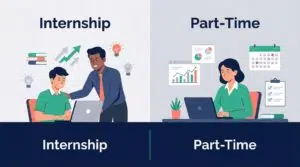
Understanding the difference between an internship and a part-time job helps businesses make smarter hiring decisions. Internships are typically designed to provide structured learning opportunities and professional development for students or early-career professionals. Part-time roles, on the other hand, are employment positions focused on productivity and operational support.
This internship vs part time job employer guide will help founders and hiring managers evaluate their needs clearly. We’ll break down the core differences, analyze the cost implications, and explain when hiring interns vs employees makes the most sense for your business.
The Core Difference
At a glance, both interns and part-time employees may work limited hours and support your team on specific tasks. However, the underlying structure and expectations of these roles are very different. The main distinctions fall into three areas: focus, duration, and mentorship requirements.
Focus: Learning vs. Earning
The most important difference is the purpose of the role.
Internships are primarily learning experiences. Their goal is to help students or early-career professionals gain practical exposure to a specific field. While interns may contribute to real projects, the internship itself should be structured around education, skill development, and mentorship.
Employers who run successful internship programs often design them around:
- Defined learning objectives
- Hands-on training
- Exposure to industry tools
- Regular feedback sessions
Interns benefit by gaining professional experience, while companies benefit by identifying promising future talent.
Part-time employees, by contrast, are hired primarily to perform productive work. Their role exists to help the company achieve operational goals. While training is provided, the expectation is that the employee contributes measurable output relatively quickly.
This difference is critical because labor laws often evaluate whether a role primarily benefits the employer or the worker.
Duration: Fixed vs. Indefinite
Another major difference is the expected timeline.
Internships usually operate on a fixed schedule, such as:
- Summer internships (8–12 weeks)
- Semester internships (12–16 weeks)
- Short project-based internships
Because internships are structured learning programs, they typically have a clear start and end date.
Part-time employment, however, is usually indefinite or ongoing. A part-time employee may work 10–30 hours per week without a predetermined end date. The company expects that person to remain in the role as long as the position exists and performance remains satisfactory.
This difference impacts how companies approach recruitment, onboarding, and long-term planning.
Mentorship and Supervision Requirements
Internships require significantly more supervision than part-time roles.
A legitimate internship program should include:
- A designated supervisor or mentor
- Regular check-ins or progress reviews
- Structured feedback and guidance
- Opportunities for skill development
Because interns are often students or first-time professionals, they require coaching and support. Companies must be willing to invest time in developing them.
Part-time employees, however, are usually expected to operate more independently after onboarding. While they may receive occasional guidance, their role is focused on delivering consistent work rather than learning through mentorship.
For startups with limited management capacity, this distinction is especially important. Without sufficient mentorship resources, an internship program may struggle to succeed.
Cost Analysis
From a financial perspective, founders often assume internships are significantly cheaper than part-time employees. While this can sometimes be true, the cost comparison is more complex than simply looking at hourly wages.
Several factors influence the true cost of hiring interns vs employees.
Hourly Pay and Compensation
Part-time employees are typically paid standard hourly wages based on market rates for the role.
Internships may be:
- Paid hourly
- Paid with a stipend
- Occasionally unpaid (depending on local labor laws)
However, many companies now offer paid internships to remain competitive and legally compliant. Paid internships also attract stronger candidates.
Training and Onboarding Costs
Interns usually require more upfront training than part-time employees.
Because interns are still learning the basics of professional work, companies must invest time in teaching tools, processes, and industry concepts. This training period may reduce short-term productivity.
Part-time employees, especially those with prior experience, often require less training and can start contributing faster.
Management Overhead
Supervision is another hidden cost.
Internship programs typically require:
- Mentorship time from senior staff
- Weekly check-ins or performance reviews
- Structured project guidance
This management investment can be valuable for talent development but should be considered when calculating the total cost.
Legal Risks
Misclassifying workers is one of the most expensive mistakes companies make.
If an intern is performing the duties of a regular employee without proper compensation or structure, labor regulators may classify them as employees. This can result in:
- Back pay requirements
- Fines or penalties
- Legal disputes
Understanding the labor law differences between internships and part-time roles is essential for avoiding these risks.
When to Hire an Intern
Internships work best when companies have the ability to provide structured guidance and meaningful learning experiences. They are especially valuable when businesses want to build relationships with emerging talent while completing short-term projects.
Here are situations where hiring an intern makes sense.
Project-Based Work
Internships are ideal for projects with clear scope and duration.
Examples include:
- Conducting market research
- Supporting a product launch
- Building social media content calendars
- Analyzing customer feedback data
Because internships typically last a fixed number of weeks, projects should be designed to fit within that timeframe.
Building a Talent Pipeline
One of the biggest benefits of an internship program is long-term recruiting.
Many companies use internships as extended interviews. Interns who perform well can later transition into:
- Full-time entry-level roles
- Graduate trainee programs
- Part-time positions during school
This strategy reduces hiring risk because employers already know the candidate’s work style and capabilities.
High Mentorship Capacity
Internship programs work best in environments where experienced team members can dedicate time to coaching.
Founders, managers, or senior employees should be available to:
- Provide regular feedback
- Answer questions
- Guide interns through challenges
Organizations that value mentorship often find internship programs extremely rewarding for both interns and staff.
Innovation and Fresh Perspectives
Students often bring new ideas, updated academic knowledge, and creative thinking. For startups, this perspective can be surprisingly valuable when brainstorming marketing campaigns, product ideas, or research initiatives.
When structured properly, internships can become a powerful innovation engine.
When to Hire a Part-Time Employee
Part-time employees are usually the better choice when your business needs consistent operational support rather than training-focused roles.
If the work involves recurring responsibilities, a part-time employee is often the more efficient option.
Examples include:
- Customer support coverage
- Administrative assistance
- Bookkeeping or accounting tasks
- Retail or service roles
- Ongoing marketing execution
In these situations, the company needs someone who can perform tasks reliably with minimal supervision.
Part-time employees are also a better choice when your team lacks the time required to mentor interns. If managers are already stretched thin, an internship program may create additional workload rather than reducing it.
Finally, businesses that need immediate productivity should consider hiring a part-time employee. Experienced workers can contribute quickly and maintain consistent output without the extensive learning curve associated with internships.
Conclusion
Choosing between an intern and a part-time employee ultimately comes down to your business goals.
Internships are designed for learning and talent development, making them ideal for project-based work and companies that want to build a future hiring pipeline. However, they require mentorship, structure, and thoughtful program design.
Part-time employees, on the other hand, are focused on productivity and operational support. They are better suited for recurring tasks, ongoing responsibilities, and situations where businesses need immediate output with minimal supervision.
By understanding the key differences—focus, duration, costs, and supervision—you can make smarter hiring decisions that support both your team and your business growth.
If you’re still evaluating your options and want expert guidance:
Unsure what you need? Book a 15-minute consultation to determine whether an internship or part-time hire is the right move for your business.
